Fixing the Problem Before Installing New Sod
Call (864) 907-1977This Greenville, South Carolina lawn replacement started with a problem that looked simple from the surface: moss had taken over large portions of the existing yard.
But moss was not the real issue. The property also had poor soil quality, significant soil compaction, and drainage problems that kept parts of the lawn damp and made it difficult for healthy turfgrass to develop a strong root system.
Moss often becomes visible where turfgrass is already struggling. It can occupy thin or bare areas when conditions favor persistent moisture and weak grass growth. Removing moss alone does not necessarily solve the reason it appeared. If the soil stays compacted, drains poorly, or cannot support healthy roots, the lawn can continue to decline even after the surface is cleaned up.
On this Greenville property, the moss was a symptom of a broader lawn failure. The existing turf was thin along the stone border, side yard, walkway, and other areas where the soil conditions and moisture problems were working against the grass.
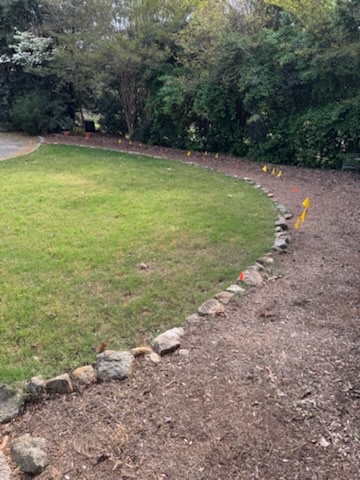
Thin, moss-affected turf along the stone border, with flags marking the areas that needed grading and drainage attention.
During the site assessment, we identified three conditions that needed attention before new sod could be installed: poor soil quality, significant soil compaction, and drainage issues.
Each one can interfere with establishment on its own. Together, they can make a new lawn struggle from the beginning.
Compacted soil can restrict root penetration and reduce the air space available in the root zone. Poor soil quality can leave new sod without the growing medium it needs to establish beyond the original sod layer. Drainage problems can keep sections of the lawn excessively wet and create conditions where healthy turf struggles to persist. And moss can continue returning if the underlying moisture and turf growth problems are never corrected.
This is why our sod replacement process begins with diagnosis rather than simply calculating how many pallets will cover the yard. A replacement lawn is only as good as the surface and root zone it is installed on.
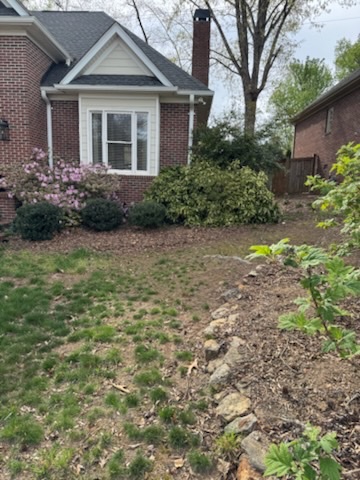
Compacted soil and persistent moisture had left this section with almost no healthy turf. Poor soil quality and drainage were the root causes.
Fresh sod creates an immediate visual improvement, which can make it tempting to treat lawn replacement as a surface job. But laying new sod over moss, compacted soil, or poorly draining ground leaves the original cause in place. The new grass may look good at first and still be forced to root into the same conditions that caused the previous lawn to thin out.
For this property, simply scraping away the moss and installing new sod would have ignored the most important part of the project. We needed to rebuild the growing conditions first. That meant relieving compaction, improving the soil profile, and correcting the areas where water movement was contributing to excess moisture.
We treated this as a full sod replacement project. The visible grass was the final step in a process that started with understanding why the old lawn had failed.
Step 1: Relieving Soil Compaction. The first correction was to loosen and prepare the existing compacted soil. Compacted ground can become hard enough that new roots remain close to the surface instead of extending into the soil below. By breaking up and preparing the problem areas, we created a more workable root zone and a better surface for the new sod to contact. This step matters especially on full lawn replacement projects because the new sod has to transition from the soil attached to each piece into the native soil underneath it. If that transition layer is hard and compacted, establishment becomes more difficult.
Step 2: Improving the Soil With Amendment and Topsoil. After addressing compaction, we incorporated a soil amendment and quality topsoil to improve the existing soil profile. The purpose was to give the replacement sod a healthier growing medium at the surface and improve the conditions where new roots would begin establishing. Soil improvement is not identical on every Greenville lawn. Some properties need only minor preparation, while others have thin topsoil, disturbed builder-grade soil, or heavy compaction that requires more correction. On this project, amendment and topsoil were part of the preparation because the existing soil was not providing a suitable foundation for healthy turf.
Step 3: Correcting Drainage Before the New Lawn Went Down. Portions of the property were staying too wet, which contributed to the conditions where moss was thriving and turfgrass was struggling. We corrected the problem areas affecting how water moved across and away from the lawn before installing the replacement sod. Proper grading and drainage correction are part of the groundwork that can determine whether a new lawn establishes or repeats the same failure.
Only after the soil, compaction, and drainage problems had been addressed did we move forward with the new sod installation. The prepared surface gave the replacement lawn a cleaner, more consistent base and removed the conditions we could correct before the grass went down.
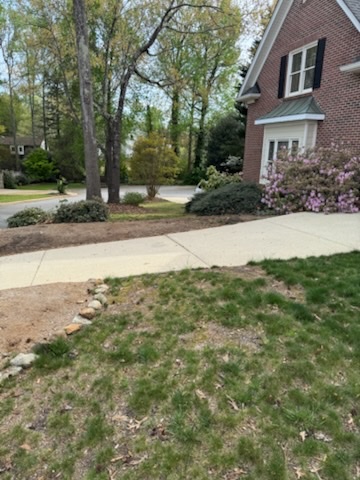
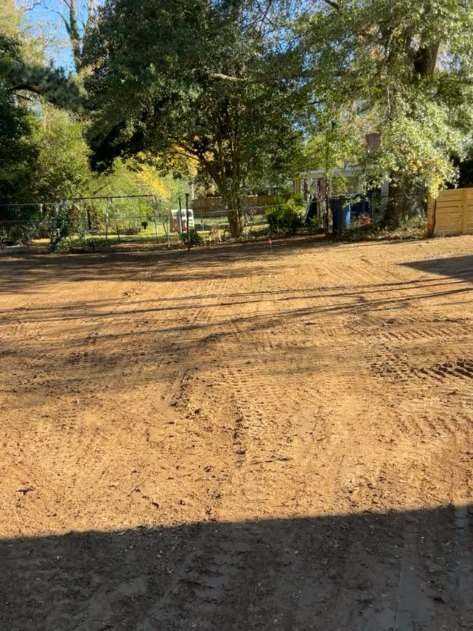
Bare, patchy areas beside the walkway where turf had thinned out. Surface grade and drainage were corrected here before any sod went down.
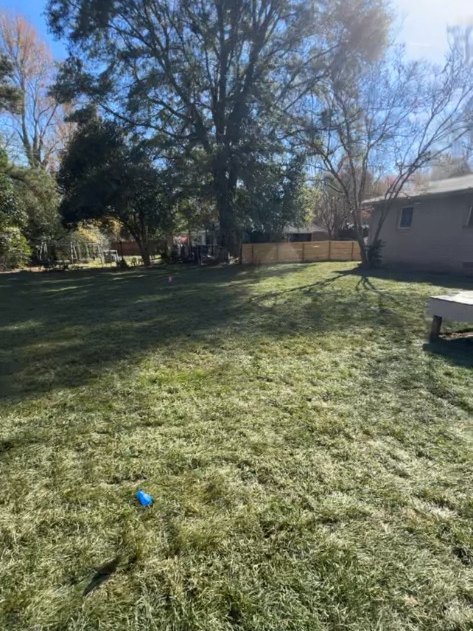
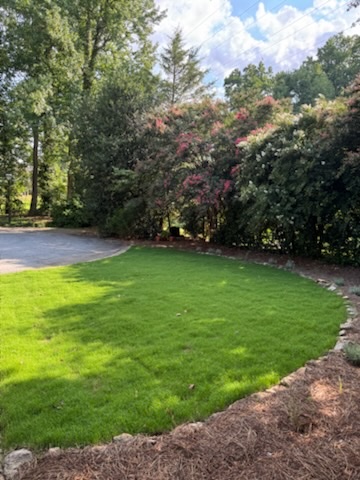
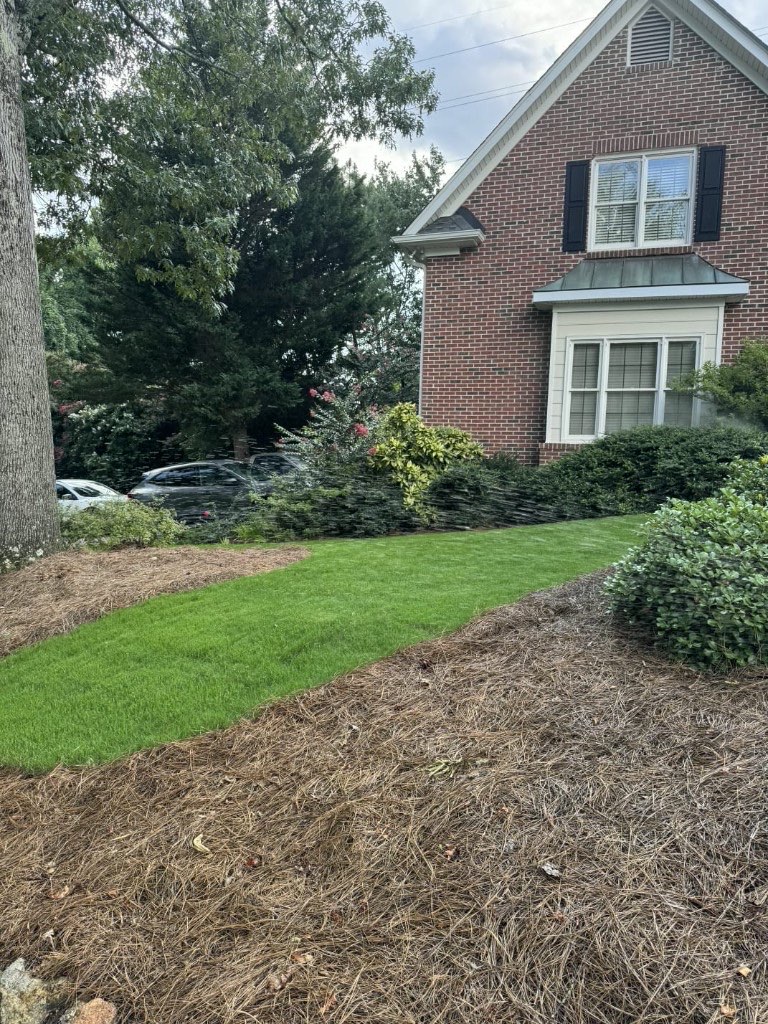
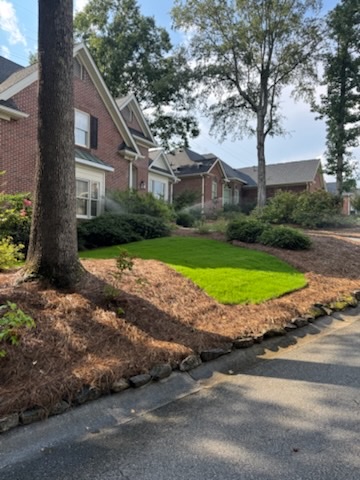
The finished result transformed areas that had been thin, patchy, or dominated by moss into a continuous new lawn. The before and after difference is visible, but the most important work is hidden beneath the finished lawn: compaction was relieved, the soil profile was improved with amendment and topsoil, drainage problem areas were corrected, and then the fresh sod was installed over a base designed to give the new roots a better opportunity to establish.
That is the difference between replacing a lawn and simply covering one. When we evaluate a struggling property in Greenville, we look at the existing turf, soil, grade, drainage, sunlight, and how water behaves across the site. If the lawn has failed because of a problem underneath it, that problem becomes part of the replacement plan.
A small patch of moss does not automatically mean the entire lawn needs to be replaced. The better question is how much healthy turf remains and what is causing the moss to occupy the weak areas. If large sections of the lawn are thin, bare, compacted, poorly drained, or repeatedly failing, a full replacement can make more sense than continuing to patch the surface. This Greenville property had widespread conditions that justified rebuilding the lawn from the ground up.
We'll walk your property, identify the conditions causing the problem, and tell you what it takes to fix it properly. Straight pricing, no pressure.
(864) 907-1977